Vietnamization Needed Years to Work. The Only Policy That Could Buy Those Years Was the One That Spent Them
7 min read
On June 8, 1969, the presidents of the United States and South Vietnam met on Midway, a coral atoll in the middle of the Pacific populated mostly by naval personnel and albatrosses. The venue was the message. Nixon could not go to Saigon, because a presidential visit would have required securing a capital that could not be presented as secure. Thieu could not come to Washington, because his arrival would have drawn the largest antiwar demonstrations of the year. So the two heads of state met where nobody lived, and there Nixon announced that 25,000 American troops would leave Vietnam by the end of August — the first increment of a withdrawal that would not stop until all of them were gone.
The announcement was framed as a consequence: the South Vietnamese armed forces had improved, and American forces could therefore be replaced. Both governments knew the framing ran backwards. The improvement had not produced the withdrawal. The withdrawal had been decided, for American domestic reasons, and the improvement was now required to happen fast enough to survive it.
That inversion is worth taking apart carefully, because it is not a story about one administration's bad faith. It is a story about a structure — and the structure recurs.
The contradiction, stated plainly
Vietnamization was, on its own terms, a serious program. An army of over a million men had to be re-equipped on a scale it had never known. An officer corps had to be rebuilt — and not just trained but depoliticized, in a system where commands were still assigned at the palace. A logistics apparatus that Americans had always run had to be made to run without them. And a soldiery facing a formidable enemy had to acquire the one thing no equipment delivery provides: the confidence that comes from fighting that enemy, over time, and winning. Every one of those tasks was measured in years, and the people running the program said so. Every serious internal estimate — the command's, the Joint Chiefs', the intelligence community's in the administration's own first review — read the handover clock in years, and the honest estimates attached political conditions no procurement schedule could meet at all.
Withdrawal was what bought those years — politically. Each increment of troops coming home cut the weekly casualty figure, drained the draft of its urgency, took the crowds off the streets, and kept a Congress moving steadily against the war from simply legislating an end to it. Without the withdrawal there was no time to give the program. The domestic clock would have struck first.
But each increment also did two other things, simultaneously and unavoidably. It reduced the force that was holding the enemy away from the handover while the handover happened. And it told Hanoi the single most valuable thing Hanoi could know: that the Americans were leaving, on a schedule, and that the schedule did not depend on anything Hanoi did. When the administration issued an ultimatum in 1969 with a November deadline, Hanoi let the deadline pass — because a threat of escalation from a government publicly committed to de-escalation is not a threat. The Politburo did not have to beat the American army. It had to outlast a process that was already running in one direction, and it responded rationally: it lowered the tempo, pulled its main forces back to rebuild, and waited for the interval to close.
A program that needed patience was being funded by a policy that consumed it. That is the whole contradiction, and it was not a product of mismanagement. It was in the design.
It is also not confined to Vietnam, which is why the shape deserves a paragraph of its own. This is the general form of every handover conducted against a deadline the successor did not set: the transition team funded out of the budget that shrinks as it works, the system migration whose staffing is tied to decommissioning the very platform that keeps things running during the cutover. The resources that make the transition politically or financially possible are drawn from the same account that makes it survivable — and everyone on the far side of the handover can read the schedule too.
The test: forty kilometers into Laos
The contradiction stayed abstract for two years. In February 1971 it was given a battlefield.
The South Vietnamese army had been built, deliberately and for a decade, around the embedded American advisor. Advisors sat with battalions and regiments; more importantly, they were the connective tissue between a South Vietnamese unit in contact and the American apparatus behind it — the fighter-bombers, the helicopter lift, the artillery, the medical evacuation. That was not a flaw grafted onto the army. It was the design assumption of the whole force.
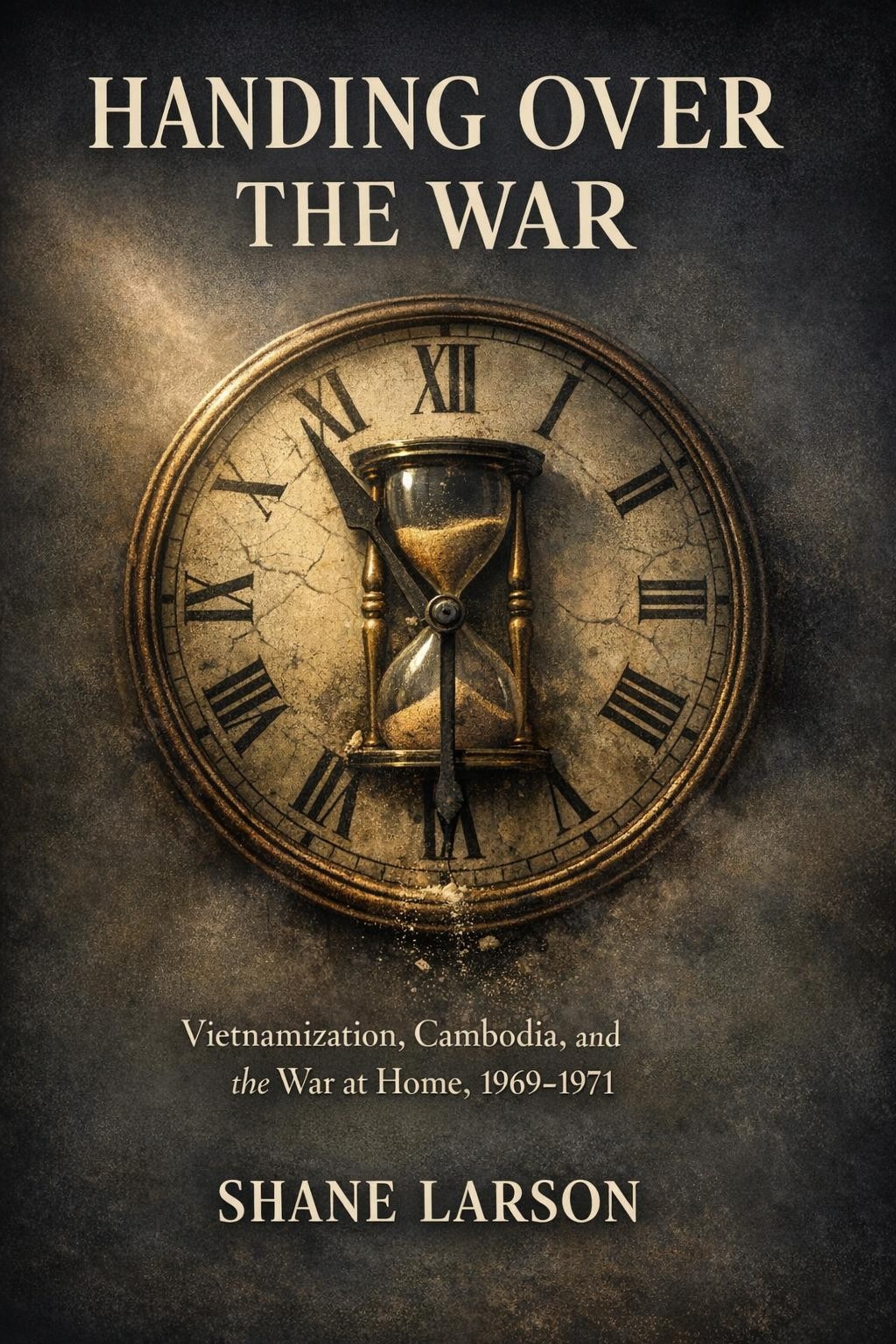
Handing Over the War
In December 1970, Congress passed the Cooper–Church amendment, which barred American ground forces — advisors included — from Laos and Cambodia. So when Operation Lam Son 719 sent that army across the Laotian border in February 1971, aimed at Tchepone and the Ho Chi Minh Trail, it went without the one component it had been constructed around. American airpower, helicopters, and artillery supported from the Vietnamese side of the border; on the ground in Laos, for the first time in a major operation, the South Vietnamese were alone — not because anyone judged them ready, but because a law watching the American domestic clock said they had to be.
What followed is one of the war's genuinely contested episodes. The advance stalled short of its objective for three weeks. Hanoi, which had spent years preparing to defend precisely this corridor, committed a force that grew to roughly twice the attackers' size, with armor and anti-aircraft weapons in a density American aircrews had never faced. Tchepone was eventually taken by helicopter assault in early March — by then a largely symbolic act — and the withdrawal that followed collapsed in places into something worse than retreat. American helicopter losses ran past a hundred destroyed and several hundred damaged. The photographs that defined the operation showed South Vietnamese soldiers clinging to the skids of departing helicopters. A month later, on April 7, the President told the country that "Vietnamization has succeeded."
What Laos proved — two readings, neither settled
The serious literature divides over what Lam Son 719 actually demonstrated, and the division is worth stating honestly rather than resolving by assertion.
The first reading: Laos proved Vietnamization had failed. Stripped of its American scaffolding, the army could not conduct a corps-level operation against a prepared conventional enemy — the chain of command fractured, a political casualty ceiling imposed from Saigon shaped decisions in the field, and the force that was supposed to carry the war alone in two years could not carry it alone for two months. And some of the failures — the ceiling, the fractured command, the three-week halt — were failures no advisor on the ground could have prevented.
The second reading: Laos proved only that Vietnamization without advisors had failed — a condition Congress had written into law, testing the army against the one circumstance its designers had never intended. On this reading the operation showed nothing about what that army could do defensively, at home, with the apparatus present; and the 1972 campaign, in which it held under full American air support, sits beyond the verdict either way.
Against the second reading stands an awkward fact: the advisors were themselves leaving, on the same published curve as everything else. The condition Congress imposed in 1971 was less an artificial handicap than the condition of 1973 arriving early. Against the first stands the equally awkward fact that no one can say what the improved army would have withstood with its scaffolding intact, because that test was never run on those terms.
The evidence does not settle the question, and a tidy answer here would be dishonest. But one party to the war declined to leave it open. Hanoi read Laos as proof that the army could be broken by conventional force once separated from its American apparatus, noted that the apparatus was being dismantled on a public schedule, and turned that reading into a plan. The decision for the 1972 general offensive was taken in the middle of 1971, on the evidence of Laos. The trucks moving south on the widened trail that winter carried tanks.
The withdrawal had bought the time. The withdrawal had spent it. Both statements are true, and the space between them is where these three years of the war actually happened.
This article draws on the research behind Handing Over the War: Vietnamization, Cambodia, and the War at Home, 1969–1971, the sixth volume of The Vietnam War Chronicles from Peak Grizzly Publishing. The book runs the fighting in Southeast Asia and the argument in America as a single narrative — the secret bombing of Cambodia, the building of the South Vietnamese army, a full chapter from Hanoi's side of the hill, the incursion of 1970 and the deaths at Kent State and Jackson State, the disclosure of My Lai, the Phoenix program's numbers reported as the categories they combined rather than the totals that laundered them, Lam Son 719, and the Pentagon Papers. Command statistics are reported as claims, contested figures as ranges with a named source at each end, and the arguments the evidence cannot settle are left honestly open.
Handing Over the War
New posts and releases, straight to your inbox. No spam, unsubscribe anytime.