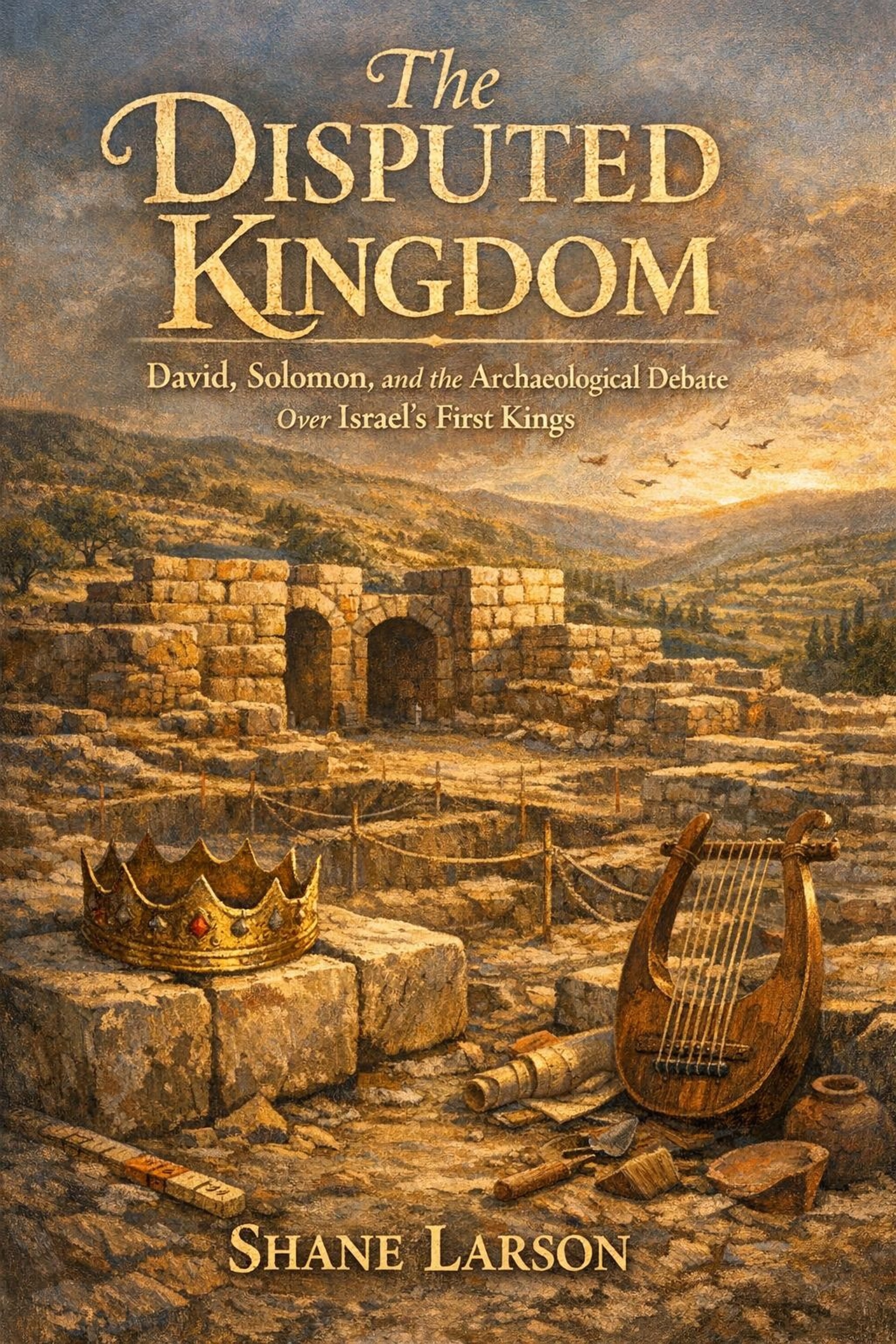
The Easter Gamble
Hanoi's 1972 Offensive, Linebacker, and the Paris Accords, 1972-1973
By Shane Larson · The Vietnam War Chronicles (Book 7)
About This Book
On 26 October 1972, the President's national security advisor stood before the White House press corps and said that peace was at hand. Ninety-three days passed before anything was signed. In between came the collapse of the negotiation, an ally's refusal, an American election, and eleven days in December during which B-52s flew against the Hanoi–Haiphong complex in the heaviest bombing operation of the war. Then, in Paris, the parties signed an agreement that looks remarkably like the one they had nearly signed in October.
What did the eleven days buy? That question is the sharpest single dispute in the historiography of the Vietnam War. One school holds that the bombing broke the North's air defences and compelled a signature four years of talking had not produced. The other holds that the January text is substantially the October draft, and that the bombing's real audience was Saigon, not Hanoi. Serious people hold each position, and the decisive documents are public. So the seventh volume of The Vietnam War Chronicles does something no other treatment at this length has done: it sets the October draft against the January agreement, article by article, in its own appendix — and lets you measure the change yourself.
The dispute sits at the end of an extraordinary year. In March 1972, fourteen North Vietnamese divisions crossed into the South with armour and heavy artillery on three fronts — the conventional invasion a decade of counterinsurgency theory had said would never come, launched in the final months of the American withdrawal. In the popular memory the war ends around 1970 and resumes for the helicopters on the embassy roof; the year between is a paragraph. Yet 1972 held the war's biggest battles, its heaviest air campaigns, and the negotiation that ended America's part in it. This book treats the year as what it was: a campaign, a bargain, and a homecoming.
Why I Wrote This
Every volume of this series refuses to settle arguments the evidence cannot settle, but this is the volume where that refusal became the book's architecture. The Linebacker II dispute is usually conducted by emphasis: one camp's books dwell on the bombing's destruction, the other's on the calendar of concessions, and the reader inherits whichever shelf they picked up first. But the two texts at the centre of the dispute are official, public documents. Nothing prevents a book from printing them against each other and standing aside — except that it costs an appendix most books spend on something else. I thought the reader deserved the evidence more than they deserved my verdict, so Appendix B is the book's real conclusion, and anyone who reads it will know exactly what changed between October and January, what did not, and what that comparison can and cannot prove.
The other reason is the pair of proofs. The 1972 offensive is the strongest evidence anyone has produced for Vietnamization — an army written off after Laos stood and fought a corps-scale armoured invasion. It is also the strongest evidence anyone has produced against it — every front that held was held with American air power that was leaving. Both are true, about the same battles, in the same weeks. Writing a year in which the evidence points honestly in two directions at once, and keeping both directions in view through every battle narrative, was the hardest structural problem in the series so far. The next volume shows what happened when only one of the proofs still applied.
Frequently Asked Questions
Did the Christmas bombing force Hanoi to sign?
The book gives both cases at full strength and endorses neither, because the evidence does not permit it. What the record does establish is a sequence: Hanoi's decisive concession — dropping its four-year demand that Thieu's government be dismantled first — was tabled in October, before the December bombing was conceived. What the record cannot establish is whether the points reopened in November would have closed without the bombing, at what price, and when; the Politburo's December deliberations are in no archive a historian can reach. The two texts are printed side by side in Appendix B so you can weigh the change against the cost yourself.
Did the Easter Offensive prove Vietnamization worked?
It proved the South Vietnamese army would fight, which is half of what Vietnamization needed. It also proved that army could not hold without American aircraft, which is the other half's refutation. The army and the air force were never separated in 1972, so 1972 cannot testify about the army alone — the separation came later, by treaty and appropriation, and the result belongs to the final volume. The book keeps both proofs in view and declines to average them.
How does the book handle the prisoners of war?
From the published debriefings, the official inquiries, and the documented record — with no reconstructed dialogue, no composite figures, and no atmosphere. Torture and coerced statements are established facts of the official record and are reported as such, factually. The accounting for the missing is reported as it stood in 1973; the book neither entertains the later conspiracy literature nor sneers at the families who kept the question alive.
How does it handle the civilian casualties of the December bombing?
Source by source, with no number endorsed. The North's published count, the American estimates, and the international reaction are each reported as what they are, and the asymmetry in the war's civilian counting — the best-enumerated dead are the ones a government chose to number — is itself part of the record the book presents.
Do I need to read the earlier volumes first?
No. The Introduction carries the war from the French reconquest through Tet and the withdrawal years in a single compressed account, and the volume stands alone. Readers of the sixth volume will recognise the structural dependency on air power arriving at its test; nothing here assumes it.
If You Liked This, You Might Like
The six earlier volumes of The Vietnam War Chronicles carry the story to this point:
- A War Inherited: France, Ho Chi Minh, and the Road to Dien Bien Phu, 1945–1954 — Volume 1, the first handover
- The Advisors' War: Diem, Kennedy, and America's Slide into Vietnam, 1954–1963 — Volume 2
- The Tonkin Decision: Johnson, Rolling Thunder, and the Ia Drang, 1964–1965 — Volume 3
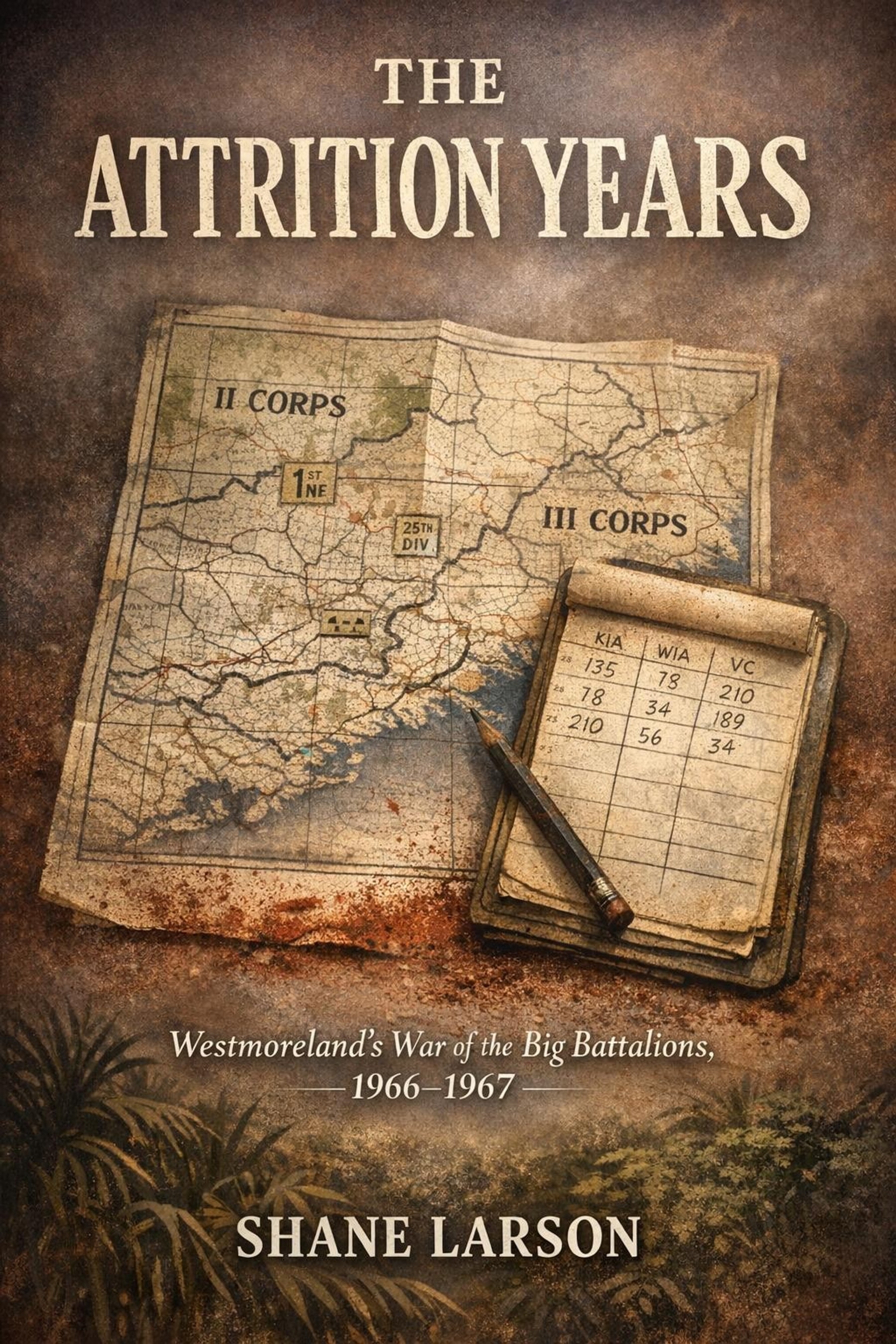
- The Attrition Years: Westmoreland's War of the Big Battalions, 1966–1967 — Volume 4, the reporting system whose claims this volume still carries as claims
- Two Hundred Thousand More: Tet, Khe Sanh, Hue, and the Year America Stopped Believing, 1968 — Volume 5, the week the bill arrived
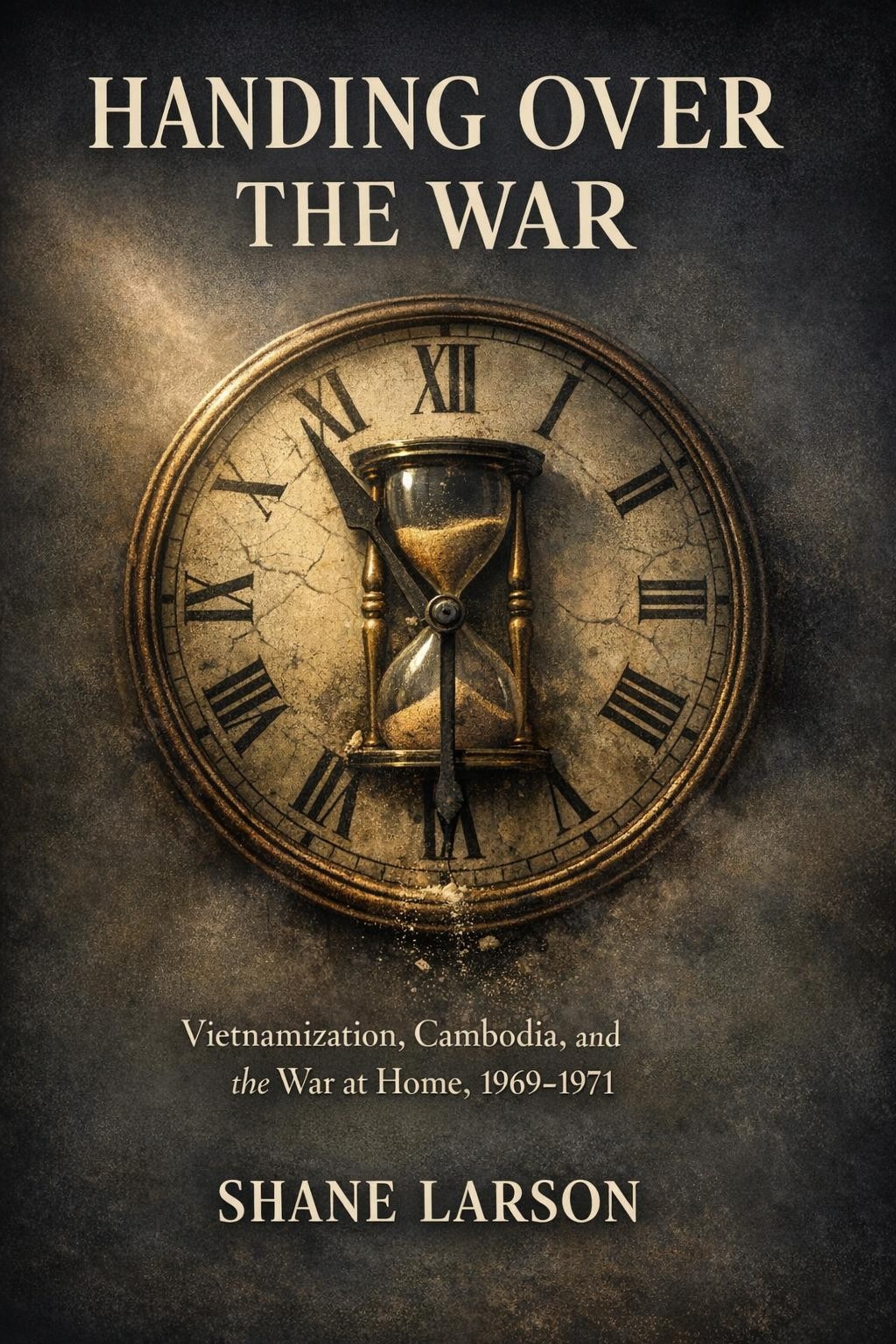
- Handing Over the War: Vietnamization, Cambodia, and the War at Home, 1969–1971 — Volume 6, the withdrawal Hanoi was reading
The offensive failed, and the failure changed nothing. The Easter Gamble is the seventh volume of The Vietnam War Chronicles, an eight-volume history of America's war in Vietnam.
What You'll Learn
- **Hanoi decides** — the Politburo's argument between protracted struggle and a general offensive, from its own official history and the scholarship on it, treated as a decision made by named men for stated reasons — including the calculation that Nixon's trips to Beijing and Moscow would not restrain its allies enough to matter.
- **The warnings missed** — what American intelligence saw in the winter of 1971–72, why the timing and the axis were both misjudged, and the reasons, which were not stupid.
- **The rout and the stand** — the collapse of a newly formed division on the DMZ, the loss of Quang Tri, and the change of command that stabilised the northern front at Hue.
- **An Loc, sixty-six days** — tanks in a town, a garrison fed by parachute, B-52 strikes danger-close to friendly trenches, and the American advisors who controlled them.
- **Kontum and the highlands** — a division that came apart in two days, a defence organised inside a fortnight, and John Paul Vann's last campaign.
- **Linebacker and the mining of Haiphong** — the decision Johnson had refused for four years, the muted Soviet response, and the operational heart of the book: what air power could do against a mechanised army that could not disperse, which it could never do against a guerrilla supply chain.
- **Hanoi counts the cost** — a second full chapter from the northern side, placed at the volume's hinge: the Politburo's own reckoning, and the autumn decision to drop the demand for Thieu's removal — the concession that made an agreement possible, taken before the December bombing existed as a plan.
- **Peace is at hand** — the October breakthrough, Thieu's objections, the crash equipment airlift to Saigon, and the collapse of the talks.
- **The eleven days** — Linebacker II night by night: the predictable routes of the first three nights and the loss rate they cost, the change of tactics, the exhaustion of the SAM stocks — and the civilian dead of Bach Mai and Kham Thien, reported source by source with no number endorsed.
- **The Accords, silences included** — a ceasefire in place, withdrawal in sixty days, prisoner return — and what the text does not contain: any requirement for North Vietnamese forces to leave the South, and any enforcement mechanism worth the name. The private letters to Thieu, and the "decent interval" question weighed from the declassified record rather than asserted.
- **Homecoming** — 591 prisoners returned between February and April 1973, the camp system reported from the published debriefings and official inquiries, and the accounting for the men who did not come back as it stood in 1973.
Included with Kindle Unlimited — read it free if you're a member.
New Military History releases and free chapters — no spam, unsubscribe anytime.
More in The Vietnam War Chronicles
View series →

More in This Genre
View all →